
Chinese–Italian Wedding in Italy: How to Bring Every Tradition Together, Beautifully
Planning a Chinese–Italian wedding in Italy means bringing together two cultures, two families, and two ways of celebrating. This guide explains how to plan each part of the day so everything feels natural and connected.
You've probably saved a Pinterest board by now. A Chinese tea ceremony here, a Tuscan villa there, maybe something that nods to your partner's side too. Each image is beautiful on its own. The problem is you can't quite see how they become one day — yours — instead of a collection of lovely things that don't speak to each other.
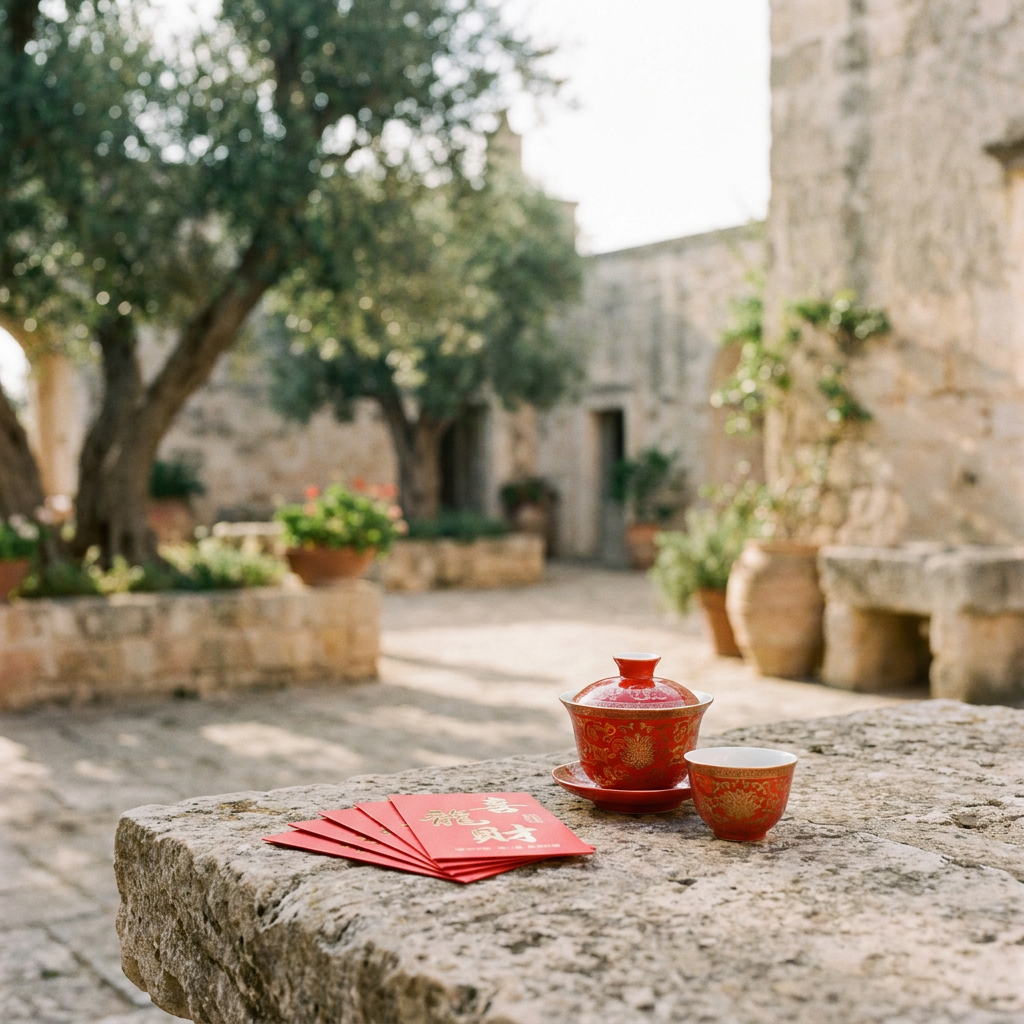
That's the real question behind a Chinese–Italian wedding. Not "which traditions do I include," but "how do I make them flow, so the day feels like our story and not a theme park of cultures." If that's the fear keeping your ideas stuck on a mood board, this is for you.
The thread matters more than the ingredients
The mistake isn't including too much. It's including things without a connection between them: a tea ceremony in the morning, a Western ceremony later, a reception that feels like a third, unrelated party.
The fix isn't blending everything into a beige compromise. It's sequencing, and small transitions. A multi-day celebration, natural for a destination wedding anyway, lets each tradition have its own space and breath. The morning holds the intimate family ritual; the afternoon, the ceremony; the evening, the long Italian feast. A shift in music, in styling, in the language on the signage carries your guests gently from one world to the next, so no one ever feels lost.
The thread that ties it together isn't a clever gimmick. It's consistency of care… the sense that every moment was chosen on purpose, for you.
The tea ceremony, done with real understanding
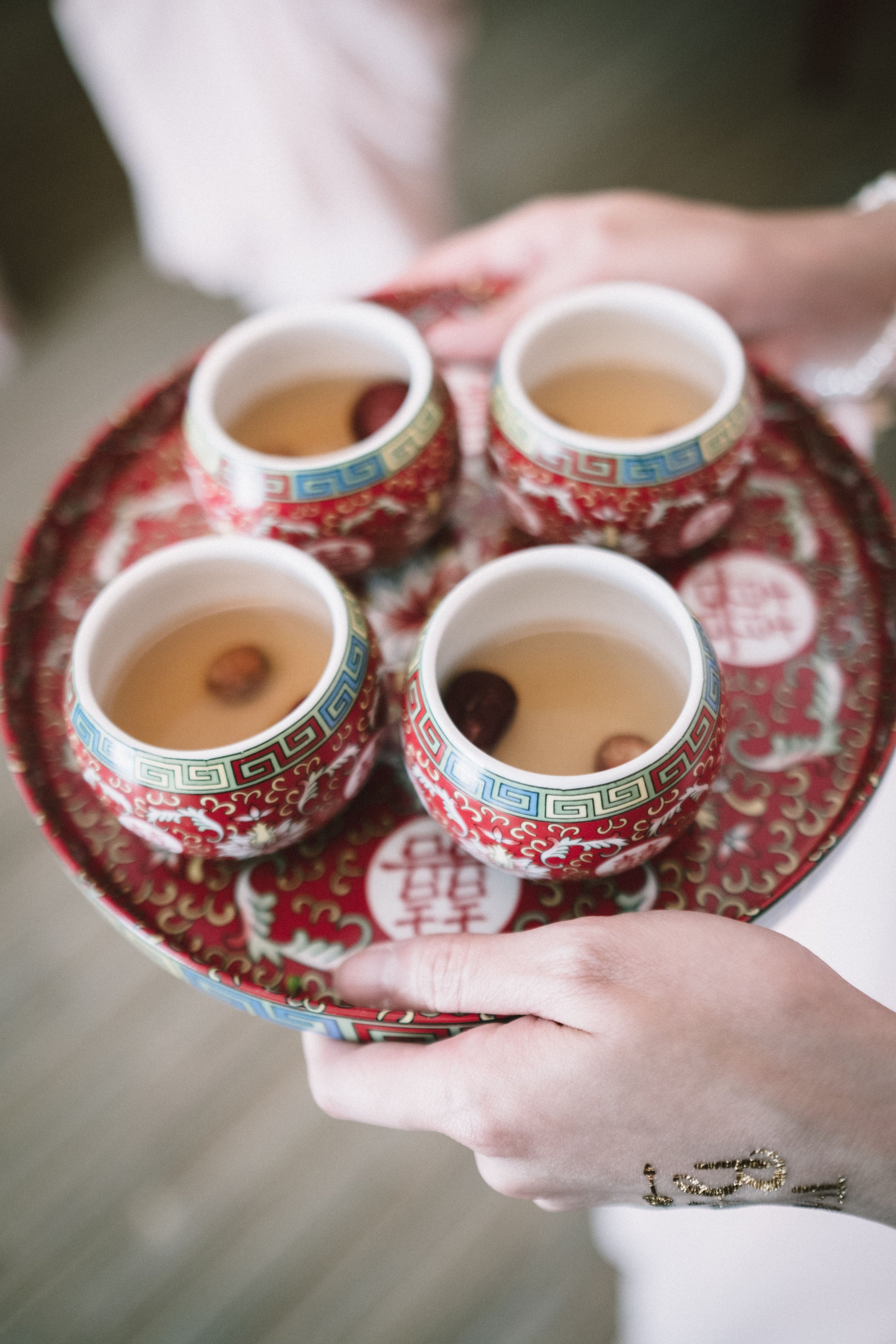
This is where a Chinese–Italian wedding goes right or wrong. The tea ceremony isn't a photo op. It's cha dao (茶道) , sometimes called the "title-changing tea," because it's the moment you begin addressing your partner's parents as Mother and Father. For many families it carries more weight than the vows themselves.
The details are specific, and they're the difference between a moment your family treasures and one they quietly never mention. You kneel before the seated elders and serve tea with both hands, a gesture of respect, addressing each by their proper title. The order follows seniority: parents first, then grandparents, then aunts and uncles. The tea often holds red dates and lotus seeds, a wish for children. In return the elders offer their blessing and a red envelope or gold jewellery, and the new way of addressing each parent is sealed.
The things that go wrong are rarely about taste. They're about timing. The parents should be served first, in soft morning light, not squeezed in after the Western ceremony when everyone's tired. About the small courtesies, like warm rather than scalding tea so an elder isn't blowing on it on camera, or preparing a cup even for someone who couldn't travel. This is the difference between a planner who arranges a pretty tableau and one who understands what she's arranging. And the same care extends to whatever your partner's side brings, and to what Italy adds: the confettata of sugared almonds in odd numbers for luck, the tarantella that needs no shared language to pull every guest onto the floor.
Guests from everywhere, made to feel at home
A wedding where people arrive from China, Italy, and beyond is logistically complicated. Different languages, different assumptions about what a wedding even is.
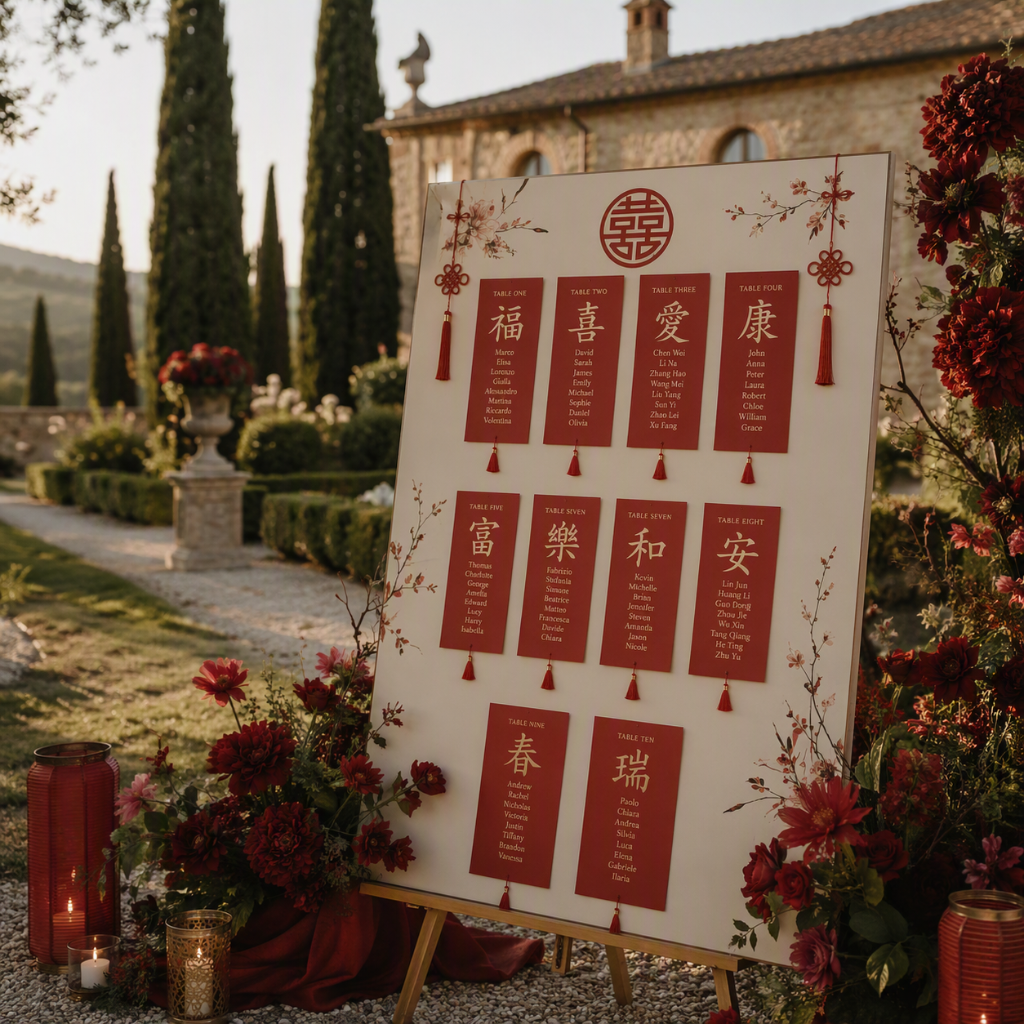
The fixes are simple and they matter enormously: bilingual invitations and signage, a clear shared timeline, a sentence of gentle context so the moment someone is watching actually means something to them. The tea ceremony especially benefits from one line of explanation, so your Italian guests understand the weight of what they're seeing. Done well, your guests don't just attend, but they feel part of it.
This is exactly the kind of thing that should be handled with files, timelines and a calm head, so the only thing you have to do on the day is be present at your own wedding.
Where, when you don't want the obvious
You don't have to marry on Lake Como because everyone does. For a wedding that needs room to hold more than one tradition across more than one day, the quieter regions tend to serve better: Tuscany for that golden light and the space to slow down, Umbria for somewhere less expected with artisans who make beautiful local favours, Franciacorta for elegant sparkling-wine country most people overlook. Authentic, not over-photographed.
A final note
A Chinese–Italian wedding in Italy isn't about blending your worlds into one smooth thing. It's about giving each its full place and trusting that they belong together… because underneath, the love of family and the joy of a long table full of the people who raised you were never really different.
Where your worlds don't compete, but meet in Italy. And where, at the end of the day, everything makes sense, together.